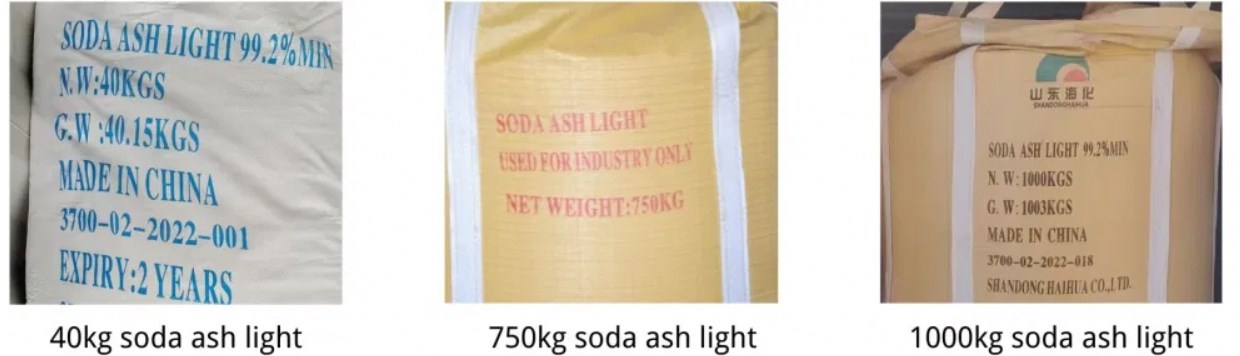
Soda ash dense is the trade name for sodium carbonate (Na₂CO₃).
It is synthetically produced in large quantities from salt (sodium chloride) and limestone.
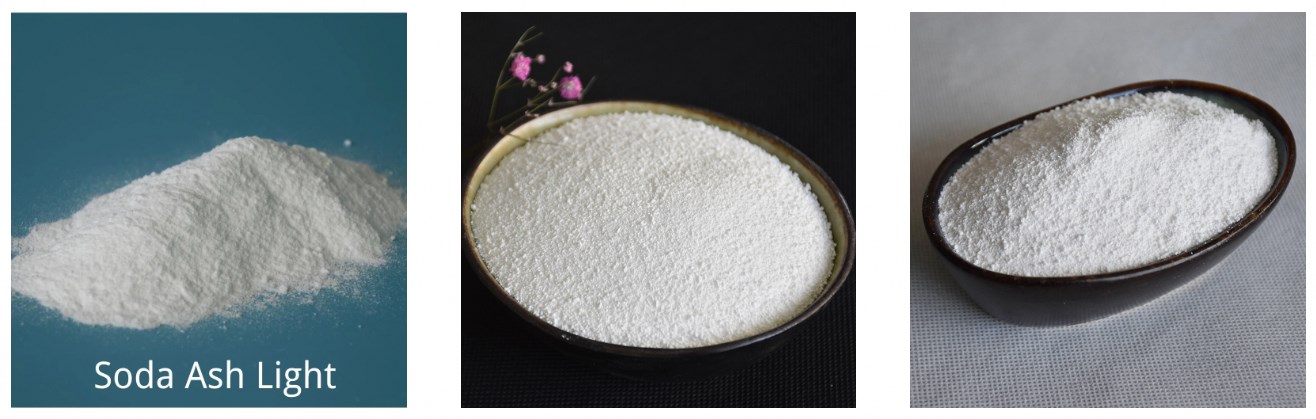
The pure product appears as a white, odorless powder with a strong alkaline taste.
It has high hygroscopicity. It can be easily dissolved in water to form an aqueous solution with moderate alkalinity.
Sodium carbonate has wide applications in various kinds of fields around the world.
One of the most important applications of sodium carbonate is for the manufacturing of glass. Based on statistics information, about half of the total production of sodium carbonate is used for the manufacturing of glass.
During the production of glass, sodium carbonate acts as a flux in the melting of silica.
As a strong chemical base, it is used in the manufacturing of pulp and paper, textiles, drinking water, soaps and detergents, and as a drain cleaner.
In addition, it can also be used for tissue digestion, dissolving amphoteric metals and compounds, food preparation as well as acting as a cleaning agent.
Soda Ash chemical compound is frequently used in manufacturing, industry, and even around the house. Glass production is one of the primary uses for sodium carbonate. Detergents and cleaning agents may also make use of it, and it can be used in cooking or as a food additive, as well.
It can play a very important role in air purification because when sodium carbonate reacts with sulfur dioxide and hydrochloric acid, less harmful compounds are produced.
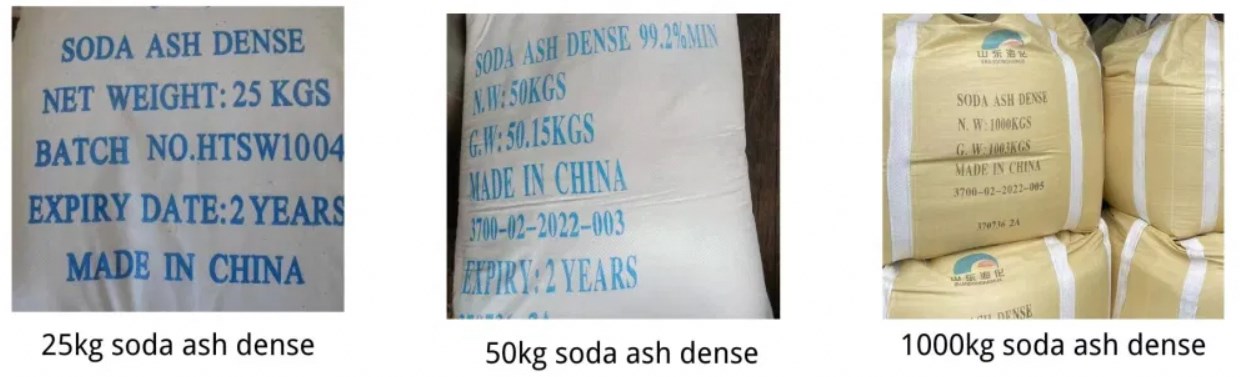
Dense grade is preferred for glass manufacture because its granular properties make it dust-free and reduce the risks of segregation during transport and handling.
The light grade has a bulk density of ~0,5 t per m3. The D50 of approximately 100 microns is very well suited for detergent and chemical applications.
Dense Soda Ash, Sodium Carbonate is also known as disodium carbonate is a chemical substance white in color and its aqueous solution is clear and colorless (chemical formula Na₂CO₃)
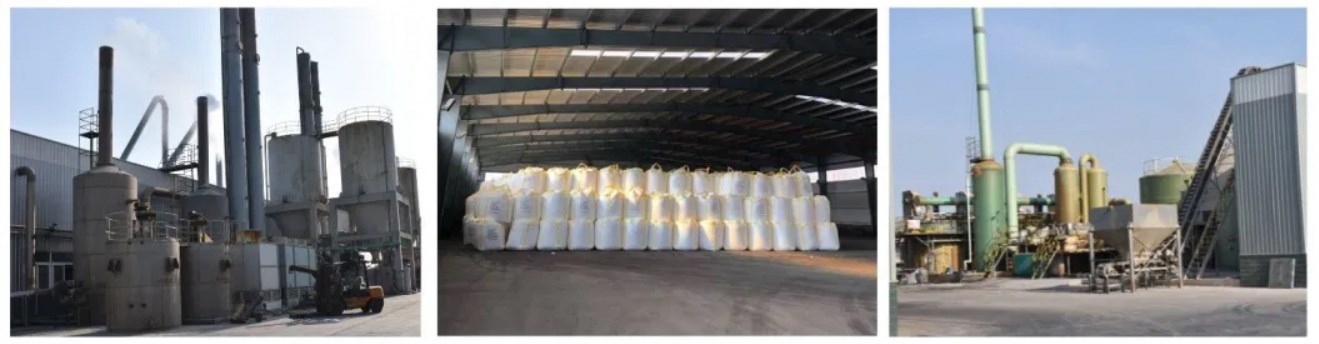
When processed, Soda Ash can vary in density, size, and shape. This flexibility allows it to be used in a variety of everyday products. From office building windows to detergents, food manufacturing to internet cables, some common examples are listed below.
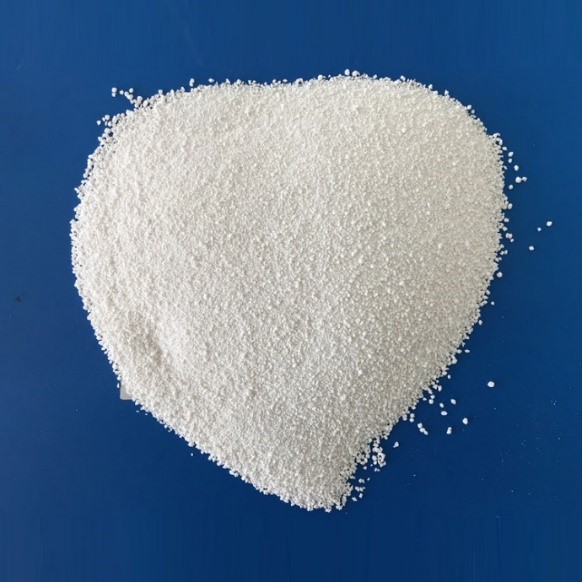
The uses of soda ash is very wild, it can be used in the manufacture of glass, such as plate glass, bottle glass, optical glass, and advanced vessels; The reaction of fatty acid and soda can be used to make soap.
In hard water softening, refined oil and oil, sulfur and no phosphorus removal in metallurgical industry, mineral processing, as well as copper, lead, nickel, tin, uranium, aluminum, and other metal preparation, producing sodium salt of chemical industry, metal carbonates, bleach, packing, detergent, catalyst, and dyestuff were to use it, for making refractory material and glaze in ceramic industry are also used to Sodium Carbonate.
In its hydrous crystallized form (Na2C03.10H2O), it is known as sal soda, washing soda, or soda crystals, not to be confused with baking soda, which is sodium hydrogen carbonate or sodium bicarbonate (NaHC03). Its monohydrate form (Na2C03·H20) is the standard compound for scouring solutions.
When in solution, sodium carbonate creates less alkalinity than the hydroxides. A 0.1% solution creates a pH of 11; a fully saturated solution is 35%, which has a pH of 12.5.
The safety requirements for sodium carbonate, because of its lower alkalinity, can be considered less demanding than those for the related bicarbonates.
Usage Areas:
Product Safety Information
Soda ash may cause eye injury and skin irritation. May be harmful if swallowed.
As with any chemical, soda ash requires care in handling. Anyone responsible for the procurement, use, or disposal of this product should familiarize himself and those handling it with the appropriate safety and handling precautions.
This information is available in the Material Safety Data Sheet, which may be obtained by contacting our Customer Service or Technical Service groups.
Soda Ash: Life’s Invisible Ingredient
Soda Ash is an essential, but invisible, ingredient in many products which we all use every day.
Over half of all Soda Ash production is used in glass manufacturing, but it is also used in a wide range of other products, such as powdered detergents and soaps and rechargeable batteries, as well as being used extensively in metallurgical processes, and across the food, cosmetic and pharmaceutical industries.
Importantly, Soda Ash is increasingly being used to improve our environment and reduce polluting emissions by removing sulfur dioxide and other harmful chemicals from exhaust fumes in shipping and other industrial flue gas emissions.
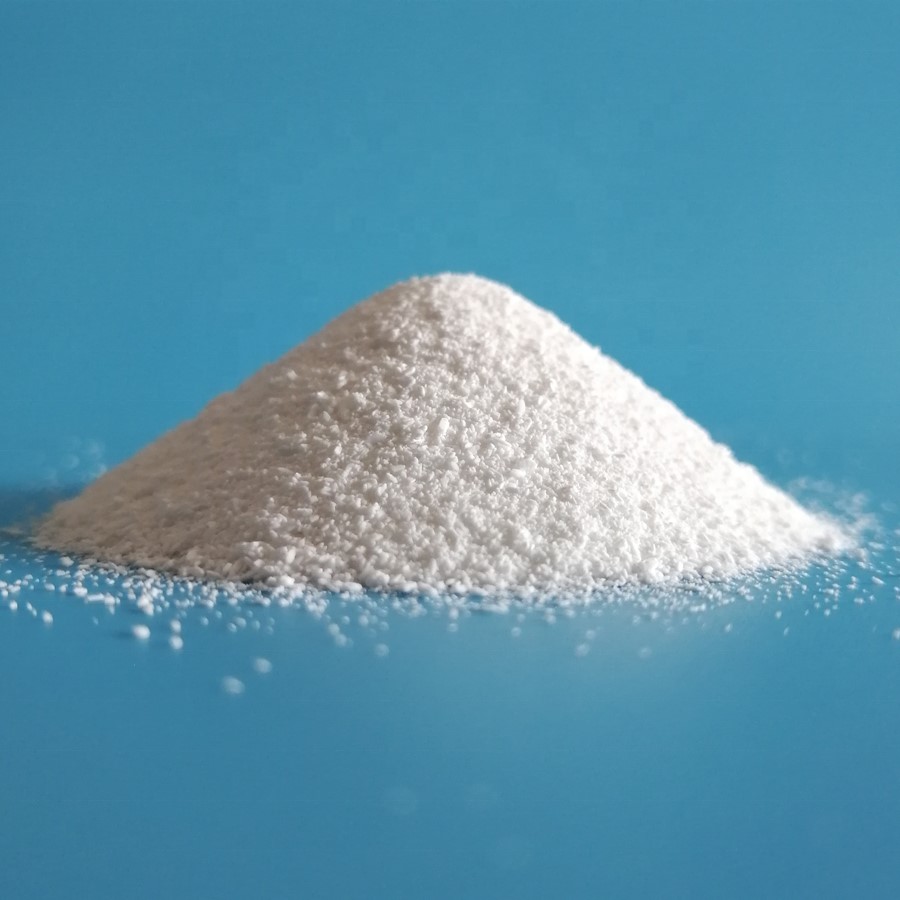
It is well known that there are two main types of soda ash: dense and light.